Dr. Pooja Tripathi
Migraine vs. Headache: Understanding the Difference
Headaches are among the most common health complaints, but not every headache is a migraine. Understanding the difference between a migraine and a regular headache can help you recognize warning signs, seek timely medical advice, and receive the right treatment.
Dr. Pooja Tripathi, Consultant – Neurology at Max Super Speciality Hospital, Lucknow, provides expert neurological evaluation for patients experiencing recurring headaches and migraine-related symptoms.
What Is a Headache?
A headache refers to pain or discomfort in the head, scalp, or neck region. Headaches can occur for many reasons, including stress, dehydration, lack of sleep, eye strain, prolonged screen time, infections, or muscle tension.
A common tension headache often causes mild to moderate, pressing or tightening pain on both sides of the head. It generally does not become significantly worse with routine physical activity.
Occasional headaches may improve with rest, hydration, adequate sleep, or appropriate medication. However, frequent or severe headaches should not be ignored.
What Is a Migraine?
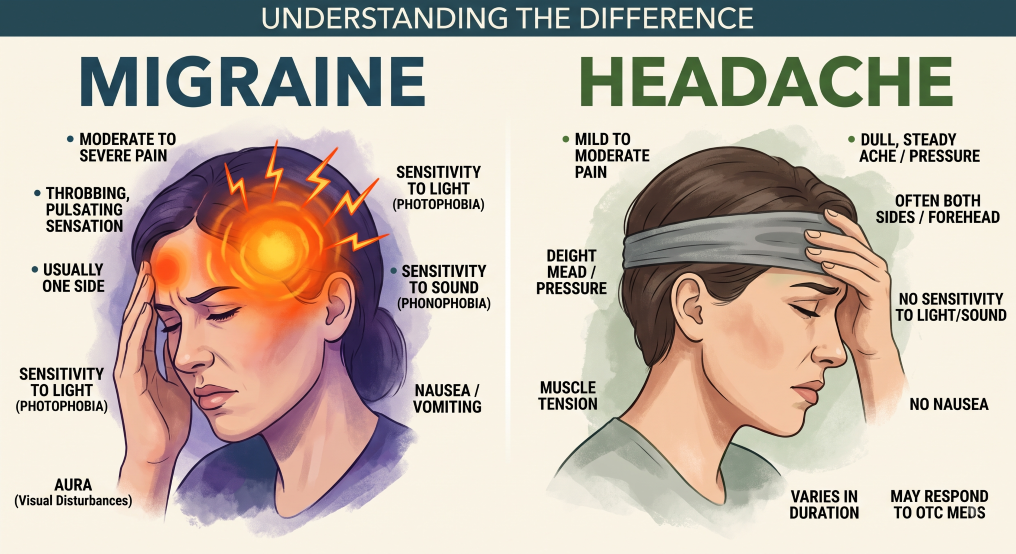
Migraine is a neurological condition that can cause recurrent attacks of moderate to severe headache, often accompanied by other symptoms.
Migraine pain is commonly:
Throbbing or pulsating
Moderate to severe in intensity
More prominent on one side of the head, although it can affect both sides
Aggravated by routine physical activity
Associated with nausea or vomiting
Associated with sensitivity to light, sound, or smells
A migraine attack may last for several hours and, in some cases, can continue for days.
Migraine vs. Headache: Key Differences
Pain
Common Headache: Mild to moderate
Migraine: Moderate to severe
Location
Common Headache: Often both sides
Migraine: Frequently one side, but can be both
Sensation
Common Headache: Pressure or tightness
Migraine: Pulsating or throbbing
Physical Activity
Common Headache: Usually does not worsen significantly
Migraine: May worsen pain
Nausea
Common Headache: Uncommon
Migraine: Common
Light or Sound Sensitivity
Common Headache: Usually mild or absent
Migraine: Common
Aura
Common Headache: Usually absent
Migraine: May occur in some people
Duration
Common Headache: Often shorter
Migraine: Can last several hours to days
These features can overlap, so a proper medical assessment is important when headaches
are recurrent or
disabling.
What Is a Migraine Aura?
Some people experience an aura before or during a migraine attack. Aura may cause temporary neurological symptoms such as:
Flashing lights or visual disturbances
Zigzag lines or blind spots
Tingling or numbness
Difficulty speaking
Other temporary sensory changes
Not everyone with migraine experiences aura.
What Can Trigger a Migraine?
Migraine triggers vary from person to person. Common triggers may include:
Stress
Stress and emotional changes.
Sleep Changes
Inadequate or irregular sleep.
Skipping Meals
Irregular meals or missing meals.
Dehydration
Not drinking enough fluids.
Environmental Triggers
Bright lights, strong smells, weather, or routine changes.
Screen Exposure
Excessive screen exposure.
Hormonal Changes
Hormonal changes may trigger migraine attacks.
Food and Beverages
Certain foods or beverages.
Keeping a headache diary can help identify individual triggers and patterns.
When Should You See a Neurologist?
You should consider consulting a neurologist if headaches:
Occur frequently
Are becoming more severe or more frequent
Interfere with work, studies, sleep, or daily activities
Require frequent pain medication
Are accompanied by nausea, vomiting, visual symptoms, numbness, or weakness
Suddenly change in pattern or intensity
A sudden, extremely severe headache—especially when accompanied by weakness, confusion,
difficulty speaking,
fainting, seizures, fever, or vision loss—requires immediate emergency medical
evaluation.
How Is Migraine Diagnosed?
There is no single blood test that confirms migraine. Diagnosis is generally based on the patient's symptoms, medical history, headache pattern, and neurological examination.
Depending on the symptoms and clinical findings, a neurologist may recommend additional tests or brain imaging to rule out other causes of headache.
Migraine Treatment and Management
Migraine management may include both acute treatment and preventive strategies. Depending on the individual's condition, a neurologist may recommend appropriate medications, lifestyle modifications, trigger management, and preventive treatment for frequent or disabling attacks.
Maintaining regular sleep, staying hydrated, eating meals on time, exercising appropriately, managing stress, and identifying personal triggers can also support migraine management.
Expert Neurological Care With Dr. Pooja Tripathi
Dr. Pooja Tripathi, Consultant – Neurology at Max Super Speciality Hospital, Lucknow, offers neurological evaluation for patients experiencing migraines, recurrent headaches, and other neurological symptoms.
If headaches are frequent, severe, or affecting your quality of life, professional evaluation can help determine whether they are migraines, tension headaches, or another neurological condition.
Conclusion
The difference between a migraine and a headache is more than simply the intensity of pain. Migraine is a neurological disorder that can involve throbbing pain, nausea, sensitivity to light and sound, and sometimes aura.
Understanding your symptoms and recognizing when to seek medical care is an important step toward effective headache management. If recurring headaches or migraine attacks are interfering with your daily life, consult a qualified neurologist such as Dr. Pooja Tripathi for an appropriate evaluation and personalized treatment plan.
Don't let recurring headaches become a normal part of your life. Understanding
the cause is the first
step toward better management.

Senior Consultant
Dr. Pooja Tripathi
Consultant – Neurology
Max Super Speciality Hospital, Lucknow
Book an Appointment
+91 8199030924