Frequently Asked Questions
Answers to common questions about neurological care with Dr. Pooja Tripathi.
01
What conditions does Dr. Pooja Tripathi treat?
Dr. Pooja Tripathi provides comprehensive care for neurological conditions including epilepsy,
stroke, migraine and headache disorders, Parkinson’s disease, movement disorders, dementia,
multiple sclerosis, autoimmune neurological disorders, nerve and muscle disorders, sleep
disorders, and neurological infections.
02
Does Dr. Pooja Tripathi treat both adults and children?
Yes. Dr. Pooja Tripathi provides neurological evaluation and management for both adults and
children, including paediatric neurological conditions.
03
When should I consult a neurologist?
You should consider a neurological consultation for symptoms such as recurrent headaches or
migraines, seizures, unexplained weakness or numbness, dizziness, tremors, memory problems,
difficulty walking, speech problems, sleep-related neurological symptoms, or other persistent
nervous-system-related concerns.
04
Does Dr. Pooja Tripathi treat epilepsy and seizures?
Yes. She provides evaluation and long-term management of epilepsy and seizure disorders,
including complex and refractory epilepsy.
05
Does Dr. Pooja Tripathi provide stroke care?
Yes. Her areas of expertise include advanced stroke care, including assessment and management of
ischemic and haemorrhagic stroke. Stroke symptoms require urgent medical attention.
06
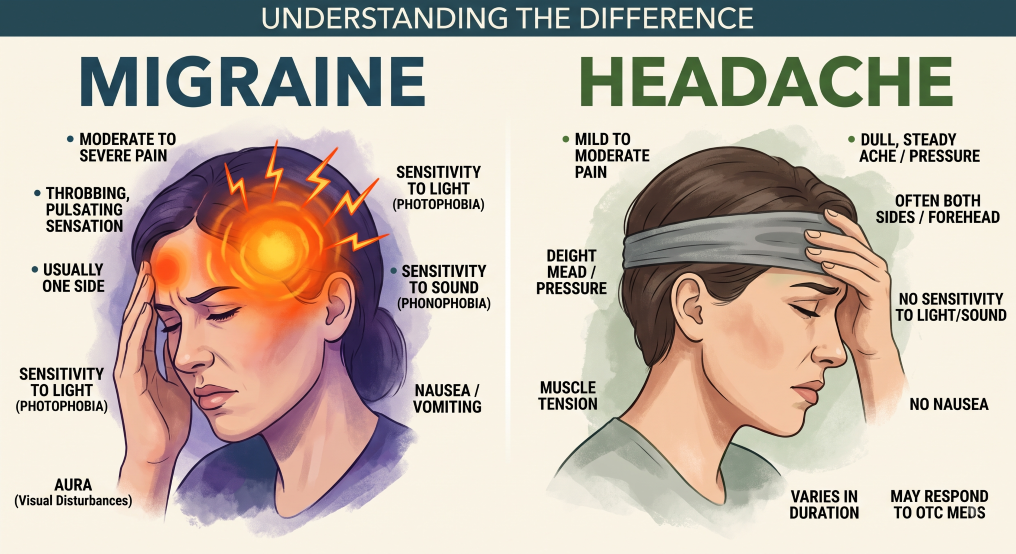
Does she treat migraine and chronic headaches?
Yes. She provides comprehensive evaluation and personalised treatment for migraine and headache
disorders, including recurrent and chronic headaches.
07
What movement disorders does Dr. Pooja Tripathi treat?
She provides care for movement disorders including Parkinson’s disease, tremors, and other
conditions affecting movement and coordination.
08
Does she treat autoimmune neurological disorders?
Yes. Autoimmune neurology is one of her areas of expertise. Evaluation and treatment depend on
the specific neurological symptoms and underlying condition.
09
Does Dr. Pooja Tripathi treat multiple sclerosis?
Yes. Multiple sclerosis is included among the neurological conditions she manages, with
treatment tailored according to the patient's symptoms, disease activity, and clinical
evaluation.
10
Can I consult her for nerve or muscle problems?
Yes. Dr. Pooja Tripathi provides evaluation and management of neuropathies, myopathies, and
other nerve and muscle disorders.
11
Does she treat Parkinson’s disease?
Yes. Parkinson’s disease and other movement disorders are among her clinical areas of expertise.
Treatment focuses on symptom management, functional improvement, and ongoing neurological care.
12
Does she provide treatment for dementia and memory problems?
Yes. Dementia and memory-related neurological problems are part of her areas of clinical
expertise. A detailed neurological assessment can help determine the possible cause of memory or
cognitive changes.
13
Does she treat neurological sleep disorders?
Yes. Sleep disorders with neurological involvement are included among the conditions she
manages.
14
Where does Dr. Pooja Tripathi practice?
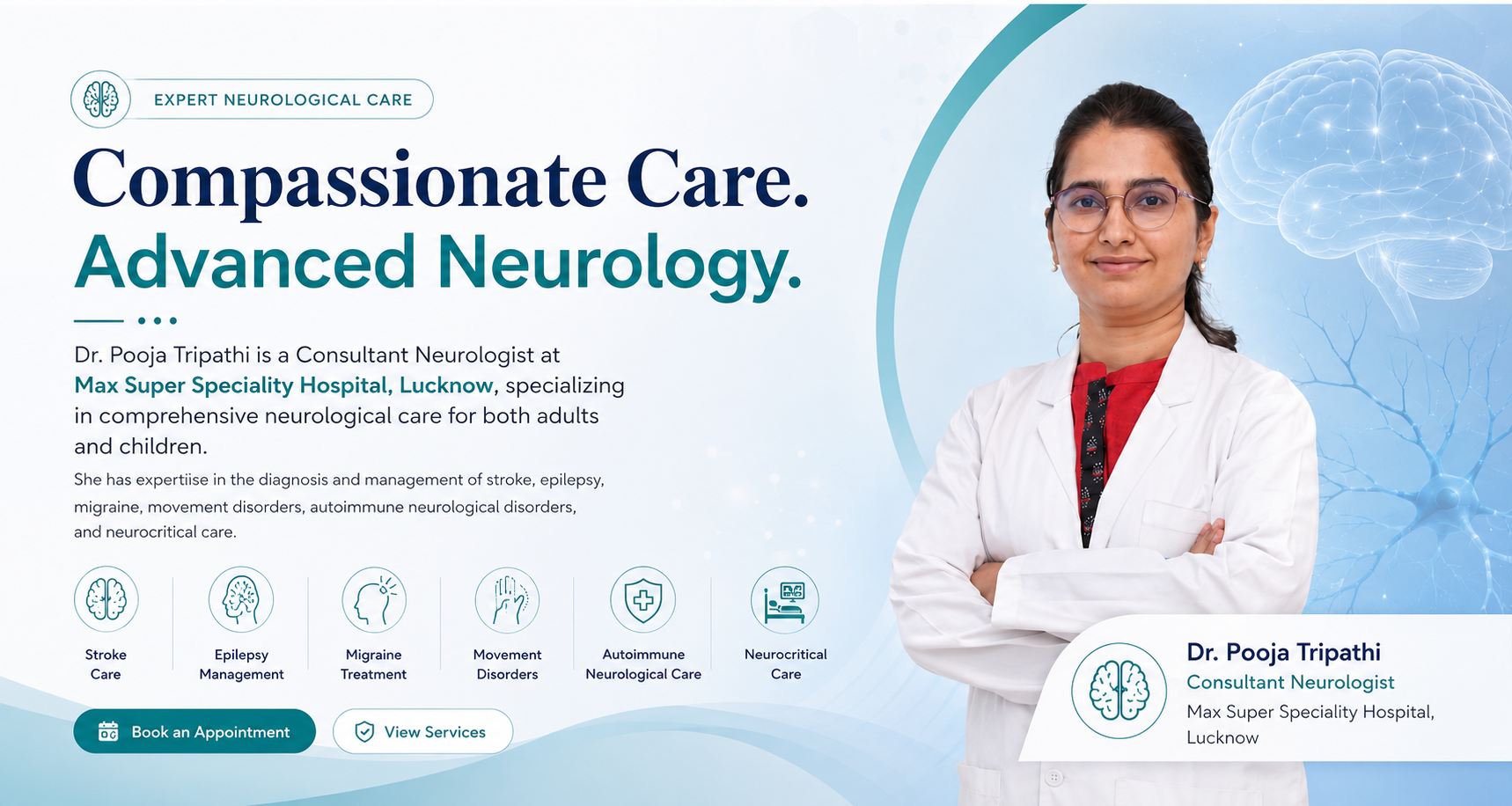
Dr. Pooja Tripathi is a Consultant – Neurology at Max Super Speciality Hospital, Lucknow.
15
How can I book an appointment with Dr. Pooja Tripathi?
You can book a consultation through the Book an Appointment option on her
website or contact the clinic at +91 8199030924.
16
What should I bring for my neurological consultation?
Bring previous medical records, prescription details, investigation reports such as MRI/CT
scans, EEG or blood-test reports, and a list of your current medications. If you have
experienced seizures or other episodic symptoms, details about when they occurred and what
happened during the episode can also be helpful.
17
Are neurological conditions treatable?
Many neurological conditions can be effectively managed with appropriate diagnosis and
treatment. The treatment approach depends on the specific condition, its severity, underlying
cause, and individual patient factors.
18
Is every headache a sign of a neurological disorder?
No. Headaches can have many causes and are not always due to a serious neurological condition.
However, new, severe, persistent, or unusual headaches should be medically evaluated,
particularly when accompanied by neurological symptoms.